On the Up: Wheel Blacks great Tim Johnson targets LA28 Paralympics in Para table tennis
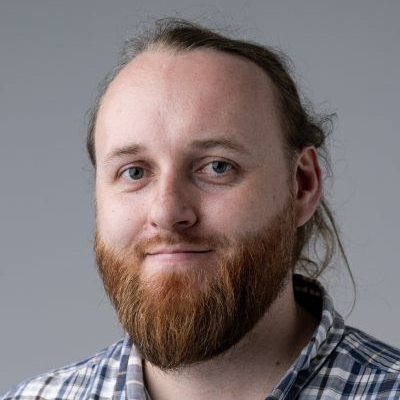

Qualifying for one Paralympics is a special moment for most athletes, but Tim Johnson is aiming to join an illustrious group of New Zealanders who have competed in two completely different sports at the Games.
Johnson is a New Zealand wheelchair rugby great, having competed at three Paralympics and helped lead the Wheel Blacks to bronze and gold at the Sydney 2000 and Athens 2004 Games respectively. He has also been honoured with a New Zealand Order of Merit for services to disabled sport.
Now, more than 18 years after his last Paralympics appearance and now aged 50, Johnson is hoping to return to the big stage at LA28 – this time in Para table tennis.
Having taken up the sport more seriously after the Covid-19 pandemic, Johnson has progressed from social player to one of New Zealand’s leading Para table tennis players.
His rise has been highlighted by qualification for next month’s World Para Table Tennis Championships in Thailand, the first of many tournaments on the horizon as he chases a spot in Los Angeles.
“It would definitely mean a huge amount to be able to do it in two sports,” Johnson said. “There’s very few people that have managed to do that in two very distinct sporting codes.
“But also, to be able to do it with a big gap between. If you look back at the likes of Sir Mark Todd, who was still competing in his 60s, it’s still doable – and table tennis is a sport where you can do that.”
In the early days of the Paralympic Games, it was practically a stipulation that the Para athletes did more than one sport, however it has since become rarer.
The last New Zealand Paralympian to have competed across two sports is Kate Horan, who competed in Para athletics at Athens 2004 and Beijing 2008, where she won a silver in the women’s 200m T44. She then switched sports and competed in Para cycling at Rio 2016.
At Paris 2024 Wojtek Czyz competed for the New Zealand Paralympic Team in Para badminton, having previously represented Germany in Para athletics at the Athens 2004, Beijing 2008 and London 2012.
For Johnson, his motivation has only grown since the Paris 2024 Paralympics, where he was a technical official for the wheelchair rugby competition. Watching from the sidelines gave him a different perspective on an event he had previously experienced as a competitor and reinforced his desire to compete again.
“I knew what it was like to be an athlete at those events and I knew what I was missing out on,” Johnson said. “Had I focused on my table tennis earlier, there’s a high chance I could have qualified for Paris as an athlete.”
The sport has also given him an opportunity to rediscover the competitive side of himself that had been a major part of his wheelchair rugby career. While the two sports appear worlds apart, Johnson believes his experience at the highest level of wheelchair rugby has given him an advantage.

“When you’re playing a high-level sport, it’s not necessarily the physical side of it – it’s the cognitive side,” Johnson said.
“The way you approach training and competition is different from just doing things socially. When it goes to the next level – whether it’s wheelchair rugby, Para table tennis or able-bodied sport – everything is focused on getting the best out of you for the performance at the end of the day.
“Nutrition, planning, timeliness, periodisation – all of those high-performance things – and sports psychology 101, like focusing on the now and controlling the controllables, all transfer across.
“I’ve got the aerobic base from my wheelchair rugby days and that cognitive mental skill set you need to achieve at the top level.”
Getting to Los Angeles will require plenty more than simply improving his game.
Playing in Thailand will provide a good idea of where he sits, but he does head there with confidence after winning a fifth consecutive New Zealand Para Table Tennis Championships Class 1-2 doubles title alongside partner Grant Sharman over the weekend.
Johnson and Sharman have a strong bond, with the pair representing the Wheel Blacks at the Sydney 2000 Paralympics, while the latter was the coach when the team won gold four years later.
Johnson also won the Class 1-2 combined singles and finished second in the open Class 1-5 singles and second in the open Class 1-5 combined doubles with Paul Vroegop.

The first major qualification pathway begins with the Oceania Continental Championships in Australia in August next year, where the winner of the relevant class can earn a direct Paralympics qualification spot.
If that opportunity is not available, Johnson will need to build his world ranking through international competition, which will be somewhat challenging with lots of competitions in Europe and America.
He is hoping to compete at several international tournaments across South America, Oceania and potentially Asia as he attempts to put himself in the best possible position. It is an ambitious, expensive and demanding road, but one Johnson is prepared to take.
“I’ve got to be honest, I’m starting to have to be selfish again, like I did when I was playing wheelchair rugby, which takes me away from my wife and kids. But fortunately, as I’m only working part-time, I can do the majority of what needs to be done while they’re at school or while my wife’s at work.
“But it’s still a big commitment financially and it takes away from resources that they could be using.”
Earlier this year, Johnson moved back to Christchurch, enabling him to focus more on Para table tennis with a dedicated Para table tennis coach, more training sessions and living closer to the venue in Riccarton.
Johnson was living in Christchurch when he became tetraplegic the day after his 19th birthday, when he was sitting on a paint can in the back of a work van and the driver lost control, causing the crash that broke his neck.
Despite the challenges he has faced, Johnson still tries to live life to the fullest, as evident in his quest for another Paralympics.
“Would I have achieved the same had I not broken my neck? I don’t know,” he said.
“But breaking my neck has given me different opportunities in life, and I’m just grateful that I’ve managed to take as many of those opportunities as possible and done pretty well at the end of the day.
“I’ve got a pretty cool life. I can’t walk, but there’s not much else I can’t do when I put my mind to something. I’m not going to climb Mount Everest, but I don’t think I would have wanted to in the first place.
“I’m still able to do pretty much anything I want to do, so my accident hasn’t really limited me that much.
“I’m fortunate I’ve got a pretty active brain, and that’s enabled me to accept and adapt to using a wheelchair probably better, or quicker, than most people.”
Ben Francis is an Auckland-based reporter for the New Zealand Herald who covers breaking sports news.