Staff question why Police Commissioner Richard Chambers remained in role amid probe
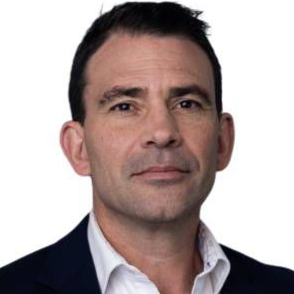

Frontline police staff are questioning why Commissioner Richard Chambers was not stood down while his conduct was being investigated.
Three sources, including a senior officer at Police National Headquarters (PNHQ), a detective and a constable, all told the Herald it was unusual to have a staff member turning up to work while under investigation.
The Independent Police Conduct Authority (IPCA) and the police’s National Integrity Unit (NIU) were both referred two separate complaints about Chambers from two different women.
A police spokeswoman told the Herald only one of those complaints was referred for criminal investigation. On Wednesday, Deputy Commissioner Mike Pannett said that criminal investigation had been completed.
“The IPCA will release its findings in due course. As the matter remains before the IPCA, Police has no further comment at this time.”
One complaint against Chambers involved historical sexual allegations made by a former partner who lived with Chambers more than 20 years ago. NIU detectives flew to Australia twice to interview her. The other complaint was more recent, involving a different woman.
A spokeswoman for Chambers told the Herald, “as this matter remains before the IPCA, the Commissioner has no comment at this time.”
Chambers said in June that he strongly rejected the claims against him and supported the investigations. “I am advised it’s not necessary for me to take leave at this point.”

A detective with more than 30 years’ experience claimed the situation was “almost unheard of”.
“Two different women came forward with concerns, yet he continued in the role without restriction. If this were an ordinary police officer, they would almost certainly have been stood down while the investigation took place.”
A constable raised similar concerns with the Herald, saying frontline police have been stood down for less. “That’s the standard we’re used to.”
She told the Herald about a situation where a colleague – also a constable – was stood down for almost a year over an alleged assault during an arrest. She said her colleague was later exonerated, but he left police as a result of the ordeal.
She said Chambers not being stood down was “something a lot of people” were “struggling with”.
The decision whether to stand Chambers down while he was investigated rested with the Public Service Commission (PSC), the agency responsible for oversight of public agency bosses.
When the investigations became public in June, the PSC refused to say why it backed Chambers to remain in his role.
“Based on the information available, the commissioner [Brian Roche] does not consider Mr Chambers needs to step down at this time,” a spokesman said.

By comparison, when the NIU started formally investigating a woman’s complaints about former Deputy Commissioner Jevon McSkimming, he was stood down swiftly.
- October 10, 2024: Claims of sexual misconduct against McSkimming were formally referred to the IPCA.
- October 18, 2024: The IPCA recommended the NIU investigate the allegations.
- November 1, 2024: Detectives from the NIU conducted their first interview with the complainant, known as Ms Z.
- November 13, 2024: Police Minister Mark Mitchell met with the PSC and Solicitor General to raise concerns about McSkimming’s ongoing “fit and proper person status”. Acting Police Commissioner Tania Kura saysshe then spoke to McSkimming that day after hearing Mitchell’s concerns, and that McSkimming left work that day and went home.
- November 14, 2024: Mitchell wrote to Kura highlighting his concerns. McSkimming was formally stood down by Kura with support from the PSC.
- November 15, 2024: Mitchell said he received a reply from Kura who told him it was agreed that McSkimming would be placed on special leave.
McSkimming was never charged over the woman’s claims as there was insufficient evidence – but during the NIU investigation police found objectionable material on his devices which led to his resignation, and later criminal conviction.
Police data shows that in the first six months of last year, there were 3694 allegations made against police staff related to 3362 incidents – the most common being excessive use of force.
The Herald asked how many of those officers were stood down – but a spokeswoman said such data would require “significant collation” and an OIA request.

Prime Minister Christopher Luxon has expressed confidence in Chambers, as has Police Minister Mark Mitchell, who said in June he was an “outstanding” commissioner and that “police officers attract complaints”.
But the assurances have done little to placate “considerable concern” among some staff at PNHQ in Wellington, where Chambers is based, according to the senior officer there.
The PNHQ employee said the discomfort wasn’t about whether the claims against Chambers were true or not.
“Many of our staff are struggling to reconcile this with the expectations we apply elsewhere in the organisation. We were asking our people to investigate allegations of sexual offending while, at the same time, the person leading the organisation was himself the subject of serious allegations.
“We wouldn’t accept that arrangement anywhere else. And police, of all organisations, at this particular moment, should understand that perception is the entire game.”
She said perceived inconsistencies in how rules were applied were “having a real impact on morale and confidence within the ranks”.
New details obtained by the Herald under the Official Information Act (OIA) reveal delayed decision-making by the PSC on whether Chambers should remain in the top job.
The documents show the PSC knew of both complaints against Chambers late last year; however, it didn’t provide any advice to ministers until June 19 this year – just before the allegations, and investigations, became public.
The Herald has asked the PSC why it delayed making its assessment and recommendation.
A spokesman said it advised ministers that Chambers could stay in his role “once the commission was advised by the IPCA that police were conducting an investigation”.
The Herald has documents suggesting police were investigating in early May, and as the Herald revealed, on June 4, detectives flew to Australia to interview one of the complainants.
The IPCA told the Herald its investigations into both complaints remain ongoing.
“The authority will publicly release the outcome of our investigations when they have been concluded. We have no further comment to make at this time,” a spokesperson told the Herald.
The IPCA’s reports into both complaints will be made public.

Police policy shows the IPCA can reach various findings, including “serious misconduct”, “undesirable conduct”, “error in judgment”, “not proven” and “not at fault”.
Policy documents give an example of a “serious complaint” against a police employee as one that would likely “generate significant media coverage”, involve a member of the police executive, or one that relates to “any incident of a sexual nature”.
The commissioner should be notified “immediately” when any police employee is the subject of a serious complaint, according to policy.

Chambers said in a statement on June 25, following questions from the Herald and other media outlets, that he’d been told by the IPCA and police that complaints against him were being investigated.
He rejected the allegations, said he would co-operate with inquiries, and declined to comment further.
The IPCA’s investigations are separate from the criminal investigation the NIU undertook, although the IPCA has previously told the Herald that it has “direct access” to the unit’s investigation files.
Michael Morrah is a senior investigative reporter/team leader at the Herald. He won News Journalist of the Year at the 2025 Voyager Media Awards and has twice been named reporter of the year at the NZ Television Awards. He has been a broadcast journalist for 20 years and joined the Herald’s video team in July 2024.