Rhodes scholar delayed Oxford study to save aunt with rare kidney disease
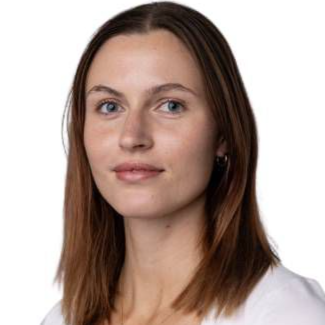

For most people, an opportunity to study at one of the world’s most prestigious education institutions would be a dream too good to delay. But for one Kiwi, attending the world’s second-oldest university was second on the list of her priorities when a family member desperately needed a kidney.
The New Zealand Rhodes scholar Isabella Lenihan-Ikin travelled as far as West Africa to research kidney disease after donating an organ to her aunt, who was battling a rare hereditary form of the illness.
Lenihan-Ikin, 29, was awarded a scholarship in 2019, but delayed going to southern England to study until she first gifted one of her kidneys to her aunt Brigid Lenihan.
Brigid has lived with a hereditary form of kidney disease, fibronectin nephropathy, all her life but was not correctly diagnosed until adulthood. She comes from a family of 10 children and her sister died at 54 from the same condition, after having a transplant that prolonged her life.
“I knew I had a kidney disease, but it didn’t impact hugely on my life,” she told the Weekend Herald.
“Then in 2018, when I saw my renal physician he said I was going to have to start looking at dialysis and I was just shocked, because I felt reasonably well.”
For Isabella, the decision to check if she was a donor match for her aunt was straightforward, even though the surgery would cause her to delay her study at Oxford University by two years.
“Yes, it is doing something for another person but I don’t see it as a heroic thing, because I think anyone who was put in that position would do that,” she said.
“This is something that healthy people can do to make a massive contribution to someone’s life.”

A research breakthrough means their family can now test for the gene that is responsible for the hereditary kidney disease through a blood test. This allowed Isabella’s mother to find out she was a carrier of the gene and was unable to donate her kidney, alongside other friends and family who explored options of donation to Brigid.
“It potentially means for future generations, the disease can stop,” Isabella said.
She felt like she bounced straight back following the three-hour surgery and within a year was running a half-marathon.
“I had the surgery on a Wednesday, and I was out first thing on the Friday morning! The process was so smooth.”
The New Zealand Government also enables donors to receive up to three months of full pay post-transplant. Isabella said this support was vital, considering any complications that could arise, but also because there was a heavy emotional toll that came with organ donation.
Dr Curtis Walker, who works at Palmerston North Hospital, said for those waiting for a transplant there was also a shortage of dialysis chairs.
He said it was “verging on breaking point” for the New Zealand health system.
Data from a 2023 survey showed NZ had 3.93 patients per dialysis chair, which was “perilously close” to four people per chair, Walker said.
A ratio of four patients per dialysis chair is considered the standard, safe capacity.
New Zealand’s health system, Walker feared, would get to the point where care had to be rationed and more people would be forced to do overnight dialysis at hospitals.
“It’s not fair for patients to have to do dialysis overnight, it should be an elective treatment that you can choose where and when you want it.
“The really difficult thing about chronic kidney disease is it’s a silent killer. I know that sounds dramatic, but most people don’t get any symptoms of kidney disease until they’ve only got about 10% of kidney function left.
“You won’t start feeling tired, sick and cold all the time until that function is really low, and by then you’re facing either dialysis or a kidney transplant.”
With a new kidney, Brigid has seen her quality of life greatly improved since her transplant and will continue to be monitored by specialists and has regular check-ups to avoid any risk of infection or her body rejecting the organ. .
She said she felt felt overwhelmed whenever she thought about the gift of life her niece had presented her with.
“I feel incredibly bonded to Issie,” Brigid said.
“I’m very aware of it [my kidney]. You really do have a huge connection knowing that her kidney is keeping me going.”
In the clinics, she also witnessed the barriers that exist in New Zealand for patients with financial hardship who might not have the support of whānau or are living in inadequate housing.
She said the dialysis team and transplant team at Te Toka Tumai (formerly the Auckland District Health Board) were dedicated and respectful in their care for patients. However, the health system needed to have better preventative screening for kidney disease to catch patients earlier and slow the progression of the illness, she said, as well as more access to dialysis and kidney transplants.
Health New Zealand (HNZ) director of national clinical networks Mary Cleary-Lyons told the Weekend Herald there was constrained access to dialysis in some areas of the country, but they were actively working to strengthen renal care and increase capacity.
According to Kidney Health New Zealand, about 400 people are on the kidney donation waiting list in the country at present.
About one in 10 Kiwis was living with kidney disease, but many of them would not know because of the lack of symptoms until the disease was well advanced, a Kidney Health spokesperson said.
“Māori are twice as likely to get end-stage kidney disease, Pacific people are more than three times likely to get end-stage kidney disease,” Walker said.
“So these ethnic groups are at risk. We need to prevent people from getting to the stage where they need a kidney, so there has to be a greater awareness about chronic kidney disease, early detection and prevention.”
HNZ director Cleary-Lyons said the greatest opportunity to address the rising demand for dialysis lay in early detection and timely treatment of chronic kidney disease, especially for Māori and Pacific whānau who were often diagnosed late.
“Demand for dialysis continues to increase, particularly for Māori and Pacific peoples who are disproportionately affected,” Cleary-Lyons said.

Research in Ghana an eye-opener
After recovering from the donation, Isabella then travelled to Oxford in 2022 to complete a Master’s in International Health and Tropical Medicine.
Through the programme, the scholarship gave her the opportunity to study the implications of kidney disease in northern Ghana.
She flew to the city of Tamale, where she witnessed the significant barriers to treatment for late-stage kidney disease in the country, with many people travelling vast distances to access dialysis chairs.
“Tamale only had six working dialysis machines and it served a population greater than New Zealand,” she said.
“In Ghana, dialysis isn’t funded as part of the national health insurance scheme.
“People would arrive trying to access dialysis machines. Some people had to travel through the night and come and dialyse before travelling all the way back. The barriers to accessing dialysis, including the high cost, meant that many dialysis patients could not afford to come the recommended three days a week.”

The limited access to kidney transplants in Ghana meant patients were fundraising up to US$50,000 ($82,000) to travel to South Africa or India for a transplant – the only long-term option for kidney failure.
Isabella’s thesis explored the gendered impact of chronic kidney disease in northern Ghana and the difficulties women faced in accessing treatment, including childbearing responsibilities and income.
“When I was in Ghana, I really came to terms with the severity and invisibility of kidney health. Seeing the women not being able to access treatment was really hard,” she said.
“People put themselves in really compromising situations in order to be able to fund and access services. There is also really fantastic work happening in northern Ghana, led by local health professionals in kidney health prevention, widening the access to dialysis and introducing kidney transplants.
“Even though I had my own lived experience of donating a kidney and being supported by the health system, at the same time it was just completely different. I also recognise that there are many people in New Zealand that face challenges accessing treatment for kidney failure.”
Isabella, who completed a bachelor’s degree in law and biomedical science before Oxford, wants to encourage other young people not to be afraid of organ donation.
She is currently completing her doctorate at Oxford in global health, also funded through the Rhodes Scholarship.
Dialysis treatment not a cure
Dialysis involves being connected to a machine that acts as an external kidney when a person’s kidneys are no longer functioning well enough to sustain life. The machine filters excess fluid and waste products from the body.
There are two different types of dialysis: haemodialysis is a type of dialysis done three times a week for five hours each time and is most often carried out in a dialysis unit. Peritoneal dialysis is a good home-based treatment option, as it can be done each night while the person sleeps.
A kidney transplant greatly improves a patient’s quality of life compared with being on dialysis, but it is still a treatment, and not a cure.
Cleary-Lyons said that over the past year HNZ had expanded community-based dialysis options to support care closer to home, increased dialysis shifts in several high-demand regions, and invested in new and upgraded dialysis units.
HNZ’s National Clinical Renal Network was also working on the creation of a national data dashboard for consistent monitoring, as well as strengthening the identification of high-risk patients across the country.
Walker said people having to travel vast distances for treatment and being negatively affected if they lived rurally was very common with late-stage kidney disease under the current conditions of the health system.
“Rain, hail or shine, they’re having to come three times per week,” he said.
Cleary-Lyons said HNZ’s recent initiatives to address constrained access to dialysis included installation of 35 upgraded dialysis machines and expanded evening dialysis services in Waitākere, a new dialysis facility in Blenheim and the new $40 million Waikato Renal Centre.
Across the country there were areas where resources were still constrained and there were business cases in development to improve access, she said.
The National Clinical Renal Network was also leading work on the development of a national demand‑modelling tool to support decision‑making on capacity and demand.
Eva de Jong is a reporter covering general news for the New Zealand Herald, Weekend Herald and Herald on Sunday. She was previously a multimedia journalist for the Whanganui Chronicle, covering health stories and general news.
Sign up to The Daily H, a free newsletter curated by our editors and delivered straight to your inbox every weekday.