New NZ First candidate Michael Laws wants broadcasting portfolio to scrap RNZ
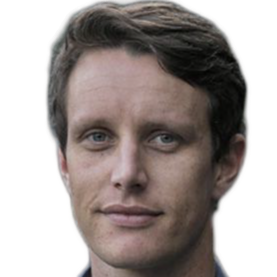

Former MP and Whanganui Mayor Michael Laws says becoming Broadcasting Minister is in his sights, with the intention to scrap Radio New Zealand, as he confirms he will stand for New Zealand First in the November election.
Laws also intends to push for public service reform that would bestow greater power on ministers, taking it away from “non-elected bureaucrats who have woke sensibilities”.
NZ First party leader Winston Peters today confirmed Laws would be the party’s Waitaki candidate, lauding Laws’ experience in central and local government, as well as in broadcasting.
Laws entered Parliament as a National MP in 1990. In 1996, he defected to NZ First. Currently a councillor on the Otago Regional Council, Laws also served stints on the Napier City Council and the Whanganui District Council, where he became mayor.
It had been widely speculated in recent weeks that Laws, also a host on the online media entity The Platform, could be NZ First’s latest recruit and join Stuart Nash and Alfred Ngaro as former central politicians making a bid through NZ First to return.
Speaking to the Herald, Laws identified several ministerial portfolios that took his interest, including broadcasting, local government, public service and tertiary education.
In a clip from his show uploaded today, Laws mentioned his desire to become the Broadcasting Minister and pointed to Radio NZ as “first on the chopping list”.

Peters had long teased reporters that in a future Government, he would take the broadcasting portfolio and make significant changes to the media industry, particularly state broadcasters Radio NZ and TVNZ.
Laws accused RNZ of being politically biased when asked why it should be scrapped.
“The public subsidises $60 million worth of government subsidy when there is such dynamic competition in the media world, television, radio, all media across the world and yet we’ve got a state broadcaster that leans very liberal left.
“If Radio New Zealand was more representative of all New Zealand, the issue might not arise.”
Another of his chief concerns was the balance of power between politicians and the public service. He argued that his time on the Otago council had proved how some public servants had “woke sensibilities” with “no sensitivity towards our region” and he supported legislative change to increase ministers’ power over the public service.
“It’s absurd that this Government and many of its ministers have been publicly professing, as they have on my show, their frustration that policies they’ve been voted in on have been put into the coalition agreements, the various parties have been frustrated by senior public servants in Wellington either slow-bagging the policy implementation or arguing ideologically against it.
“That is not the way democracy should work.”
He pointed to Associate Housing Minister Tama Potaka refusing to intervene in the Ministry of Social Development’s performance targets for its staff related to emergency housing approvals.
“Here’s a minister of the Crown saying, ‘Oh, that’s an operational matter, I can’t get involved’. You’re the effing minister, what do you mean you can’t get involved?
“That is the kind of relationship that exists now in Wellington, where elected ministers feel that they cannot interfere.”
Laws appeared optimistic he might be able to retain his show on The Platform should he form part of a Government, although he acknowledged it was not a decision solely for him.
“That’s a different matter, so we’ll cross that bridge when we get to it.
“But I would certainly say there are good benefits to retaining that particular role … it’s extraordinarily powerful to be able to, not just be able to communicate to that sizeable group of people, but also more importantly to get the feedback as to whether or not what you’re doing is right or wrong and having that sort of instant response.”
Adam Pearse is the deputy political editor and part of the NZ Herald’s press gallery team based at Parliament in Wellington. He has worked for NZME since 2018, reporting for the Northern Advocate in Whangārei and the Herald in Auckland.