Election 2026: Opportunity makes history, on track to enter Parliament
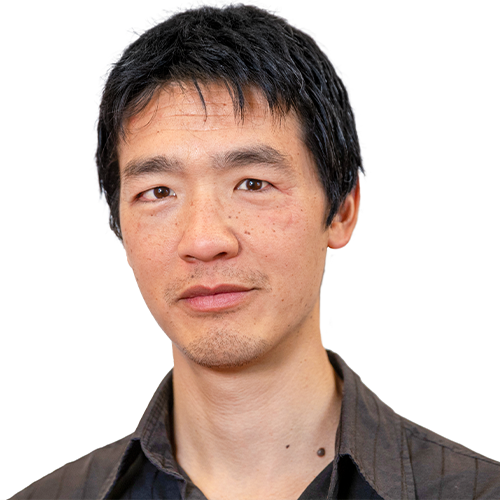

Opportunity appears to have made history and is likely to enter Parliament, having secured about 6% of the party vote in the election’s preliminary results.
The final results won’t be known until November 27, but if Opportunity remains above the 5% threshold, it will be the first new party in Parliament in the MMP era without a leader who had previously been in Parliament.
It caps a remarkable 12 months for leader Qiulae Wong, who successfully applied to be leader a year ago (a position advertised on Seek), and has turned the party from one considered to have no hope into a history-maker.
“It was pretty surreal tonight, to be honest, and obviously we’ve been hoping and planning for this for a long time. But we were never counting on it until we saw the results,” Wong said.
It was “so satisfying” to walk into the venue and see the initial preliminary result of 5.8%.
“A huge amount of relief, because we’ve worked so hard for it.”
Wong may also hold the balance of power, though that won’t be known for certain until the final results. The preliminary results suggest a tight race for the coalition, aided by an overhang, to hold a parliamentary majority without needing Opportunity.
Wong said it was possible that any negotiations would wait until after the final results were confirmed, though as it seemed almost certain National would win the most seats, she would probably reach out to National in the coming days.
“It’s been a really tight race and it looks like things are still unfolding. Ultimately they [National] still have to want to talk to us as well,” she told the Herald.
“So let’s wait and see.”
All options remained on the table, including a coalition or confidence and supply agreement or being in opposition, if agreement can’t be reached.
“We get one chance to make a good impression for New Zealanders on us being a viable and credible party in Parliament.
“We want to be re-elected in 2029.”

It was a jubilant atmosphere at the World Cup Lounge at Eden Park in Auckland, where 400 supporters gathered to see if the party could achieve what the polls have been indicating all campaign.
A loud cheer erupted just after 7pm when the first preliminary numbers showed 5.8% – enough to enter Parliament. That dropped initially but then climbed up to 6% with 91% of votes counted.
Wong was mobbed with cheers and hugs as she arrived at the event, taking the stage with the words: “We did it! It’s looking very likely that after a decade the Opportunity Party is going to make history tonight!”
She became emotional when she thanked her family, including husband Grant.
“Whether it’s extra bath-time shifts with the kids, flyer deliveries, or just a supportive hug ... I could never tell you how much it means to me ... and my whole family who is here tonight for being the village that has got me here today.”
She said she applied for the job as leader because she was frustrated at the “slow pace of change towards a more sustainable and inclusive economy” while seeing politicians trade insults more than talk about the issues.
“New Zealanders have made their voices heard. To say that we believe things can be done better. We believe that we can change the way we do politics, to focus on the future, on the next generation, and on finding common ground.”
Wong told the Herald’s Ryan Bridge “stability” will be the most important factor in who Opportunity chooses to work with – if her party ends up in the kingmaker position.
“Stability is really important, particularly if it is going to be a really tight result,” she said.
“There is a lot that New Zealand agrees on, and there are things that we need to get on with really quickly, like fixing our health system and having a cross-party approach to these things.
“Stability also speaks to the agenda of the Government over the next three years. We need to see that there are policies and ideas that are going to take New Zealand forward, not cause more division. So yes, it is about numbers and a mandate, but it is also about the ideas and how we are going to bring New Zealanders together over the next three years.”
She later told media she was looking forward to getting together as a caucus early next week.
“We are very aware that this is just the start of the next big challenge.
“I’m really excited about that. It is absolutely surreal to feel like we are actually in this position. We have made history.”
Wong confirmed she would begin talks with the party with the most seats, and she wouldn’t hold parallel talks with both National and Labour.

Opportunity has also released five bottom lines that Wong has described as “concrete” non-negotiables:
- empowering the Commerce Commission to increase competition;
- phasing out bottom trawling;
- restoring climate credibility;
- a 10-year cross-party health plan;
- reforming lobbying and political donations.
Of those, a cap on political donations, phasing out bottom trawling and restoring climate credibility would be the thorny issues where four-party agreement on the right – with National, Act and NZ First – might be scarce.
She has also said that the overall governing agenda would be important, with critical issues including being a voice for the environment and nature, honouring Te Tiriti o Waitangi, and pushing back on what she’s called the politics of division.
There’s also the tension between Opportunity and NZ First.
Wong has described NZ First’s rhetoric on gender and diversity as dangerous and divisive, and ruled out supporting a government with NZ First leader Winston Peters as Foreign Minister after his “go back to your own country” comments to Green MP Lawrence Xu-Nan.
Peters has also previously ruled out working with Opportunity.
NZ First candidate Michael Laws’ recent comments – about Wong and incoming MP Kayla Kingdon-Bebb – have also been condemned as sexist and misogynistic.
Wong also said she would rather walk away from negotiations than support a bill to select committee that she strongly disagreed with, such as one abolishing the Waitangi Tribunal, which Act and NZ First support.
Shortly after delivering her speech, Wong was asked on TV whether she’s had any text messages from National MPs yet.
“Not that I’m aware,” she said, smiling.
She reiterated her team would negotiate first with whatever party had the most seats.
National Whangaparāoa candidate Mark Mitchell was asked on the 1Newsbroadcast whether National would look to work with Opportunity to form a Government.
“We’re in the MMP...you have to operate inside that MMP environment,” Mitchell said.
Luxon had been right to rule out Opportunity during the campaign, he added, but politicians should respect and work within voters’ wishes after the election.
Pressed whether his answer meant National would talk to Opportunity, Mitchell merely smiled.

If the preliminary results hold, Opportunity would have seven MPs:
Qiulae Wong
Leader since November. Born in Fiji and raised and educated in Auckland. Returned in 2022 from nine years living in Britain. Degree in law and politics. Worked in business sustainability and climate. Party spokeswoman on finance, economy, commerce, energy, community and voluntary sector, and national security.
Daniel Eb
Deputy leader. Born in South Africa, came to New Zealand aged 8. A communications expert with a special interest in regenerative food and farming systems. Set up the open-day farm project Open Farms. Party spokesman on agriculture, forestry, Customs, Police, Corrections, foreign affairs, defence and trade.
Jessica Hammond
A public servant born and raised in Wellington. Has specialised during her career in transport infrastructure, health and disability and Māori development policies. The most experienced of the candidates, having previously stood in Ōhāriu in 2017, 2020 and 2023. Unsuccessfully stood for the leadership in 2020. Has been an advocate for kids with allergies. Revealed she was treated this year for breast cancer. The party’s spokeswoman on health, social development, employment, public services, children, seniors.
Kayla Kingdon-Bebb
Chief executive of conservation group WWF with a special interest in oceans and fisheries, Treaty law and resource management. Born and educated in Canada. Gained a PhD in land economy at Cambridge University. Former public servant in the Department of Conservation (DoC) and the Ministry for the Environment. Worked on He Puapua, the controversial report commissioned by the Government to respond to the United Nations Declaration on the Rights of Indigenous Peoples. The party’s spokeswoman on climate change, conservation, environment, oceans and fisheries.
Eden Skipper
Research assistant at Canterbury University in alternative economic futures. Works in environmental restoration and indigenous development. BSc in statistics from Canterbury. Born and raised on Banks Peninsula and is active at his marae. Has worked for the Ministry for Primary Industries (MPI) as an adviser in Māori capability. Party spokesman on Māori development, Treaty of Waitangi negotiations, statistics, and youth.
Jodie Kuntzsch
An entrepreneur with a background in seafood and aquaculture, she led the set-up of Moananui, a collaboration of organisations centred on oceans and the blue economy. She arrived in New Zealand from Midwest America 23 years ago on a working holiday and stayed to work as an aquaculture analyst at MPI. Party spokeswoman on science, research, technology, immigration and state-owned enterprises.
Sarah Lucas
A small business owner and manufacturer who has worked as a social worker and mental health manager. She has lived overseas including in post-war Kosovo and Nepal.

A long journey
Opportunity’s party vote in three successive elections was 2.4%, 1.5% and 2.2% under party leaders Gareth Morgan, Geoff Simmons and Raf Manji respectively.
The party advertised for a leader a year ago. Wong was not a party member, although she was on its mailing list and saw the ad that way. She was working for consulting firm KPMG advising on sustainable business.
Tim Dorrian, the party’s digital campaign manager, was at one of Opportunity’s first meetings in 2017 when it was known as TOP (The Opportunity Party).
“Honestly, for me and for a lot of the people here, it’s a life goal to see Opportunity get over this line,” he told the Herald.
“I’ve just seen so many people who are just operating off hope that something is possible and something is doable, and that’s kind of motivated them to get out and doorknock and deliver flyers and draft up social media posts.
“The majority of this is just done on volunteer hours. It’s just so much love for the cause and a belief that New Zealand can be better. So it’s been very, very rewarding for me to see this community continue to grow.”
He described Wong as a “real guiding light”.
“To have this smart, intelligent woman who seems to be incredibly good at debates has, I think, catalysed things even further, being able to fall in behind a leader whose value set is really clear.
“She wants to make New Zealand a better place for her children, and to make that pivot from corporate consulting and the sustainability world and try and zoom out and change things systemically - I think that’s a great story.”
Derek Cheng is a senior journalist who started at the Herald in 2004. He has worked several stints in the press gallery team and is a former deputy political editor.