Election 2026: Labour thinks it can force social media companies to make changes or ‘they will pay the price’

The Labour Party is confident it can force social media companies to make changes to their platforms, saying “they will pay the price” if they don’t.
The political party on Monday promised to make social media companies give users the choice to either have a personalised feed driven by the algorithm, or a feed only showing posts from people the user follows.
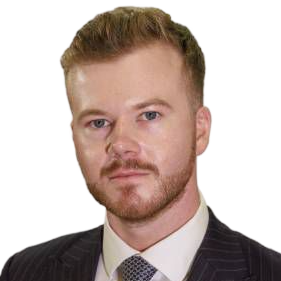
“The algorithms deciding what we see are designed to keeping us scrolling, but that’s not always what Kiwis want,” Labour science, technology and innovation spokesman Reuben Davidson said.
“You might like your recommended feed, and that’s fine, but you should have the choice to switch to seeing only posts from people and accounts you follow.”
Many social media platforms already allow users to choose between a feed only showing accounts that the user follows or a feed that promotes recommended posts the algorithm believes the user will be interested in.
Asked by the Herald how Labour would force social media platforms that don’t have this option to make such a change, Davidson said New Zealand would work with other countries.

“By putting the Digital Duty of Care in place and by working with other countries like Australia and joining them in their action ... we will make sure that we have in place a framework that ensures all New Zealanders, and young New Zealanders, are safe online.
“Those platforms will have to work within those rules.”
The Digital Duty of Care is a set of basic legal responsibilities Labour would impose on social media companies, such as stronger protections against harmful content and non-consensual sexual images, and requiring platforms to identify risks and what they are doing about them.
Davidson said there would be penalties, noting there are penalties in the bill already introduced to the House to ban social media for under-16s. The most serious penalty for non-compliance under that legislation would be the greater of either $40 million or 10% of the relevant global turnover.
“They’re big penalties because these need to be taken seriously. They are big dangers and big threats for young people,” he said.
Asked whether global social media companies would really take notice of these penalties, Davidson said there was a “force multiplier effect” by working alongside other countries.
“Globally, social media platforms are losing their social license to operate the way that they have. The world is looking to governments to create stronger rules and regulations to keep young people and all people safe in those online spaces.
“Our plan does that and that’s why we think it’s so important that we have the opportunity to put it in place.”
He said if New Zealand put in place “robust laws” as well as a regulator and penalties alongside other countries “then we absolutely will see, I believe, a change in the behaviour of social media platforms”.
“They will start to abide by the rules and regulations that we set and if they don’t, they will pay the price.”
Those answers are similar to what National’s Christopher Luxon said about enforcing his bill for the social media ban for under-16s.
Asked how the Government would make social media platforms front up and pay if they don’t comply, Luxon said: “I think there’s real power in the fact that we are acting in concert with many other countries around the world”.
Labour also promised other measures it says will make it safer for New Zealanders online.
That includes banning social media for under-16s, something National is also intending to do. Labour is promising to send the bill through its first reading and to a select committee within the first 100 days, with stronger privacy safeguards on age checks.
Luxon today said National’s plan was always for the bill to go to first reading in the first 100 days.
New Zealand First leader Winston Peters said Labour’s policy to ban social media for under-16s is “a naive solution to a genuine issue”.
“Throwing out simplistic soundbites denies the reality that banning social media in its entirety means either banning VPNs [virtual private networks] or using digital ID for everyone – otherwise, it’s a fools errand and meaningless,” Peters said.
“The failure in Australia to implement such laws highlights this and Labour knows it.“
While a social media ban bill has been proposed under the current coalition Government, it only has the support of one coalition party – National. NZ First and Act haven’t supported it.
Peters said “everyone with children wants them protected from the harms of social media, but the threat of everyone needing to lose privacy and freedoms to enable that to happen is what Labour needs to explain to Kiwis”.
Jamie Ensor is the NZ Herald’s chief political reporter, based in the press gallery at Parliament. He was previously a TV reporter and digital producer in the Newshub press gallery office. He was a finalist in 2025 for Political Journalist of the Year at the Voyager Media Awards.