MPI must consider the strength of its yellow-legged hornet response – Editorial

THE FACTS
- The yellow-legged hornet poses a major threat, with nests found in Auckland’s Glenfield and Birkdale.
- The Ministry for Primary Industries (MPI) has increased traps and brought in an overseas expert and advanced tracking technology.
- Critic Brad Windust argues MPI’s response is too slow and demands more extensive measures.
The yellow-legged hornet is a dangerous invader and every possible measure must be taken to halt its emerging presence in New Zealand.
Alarm bells are ringing after multiple discoveries of hornet nests in the suburbs of Glenfield and Birkdale on Auckland’s North Shore.
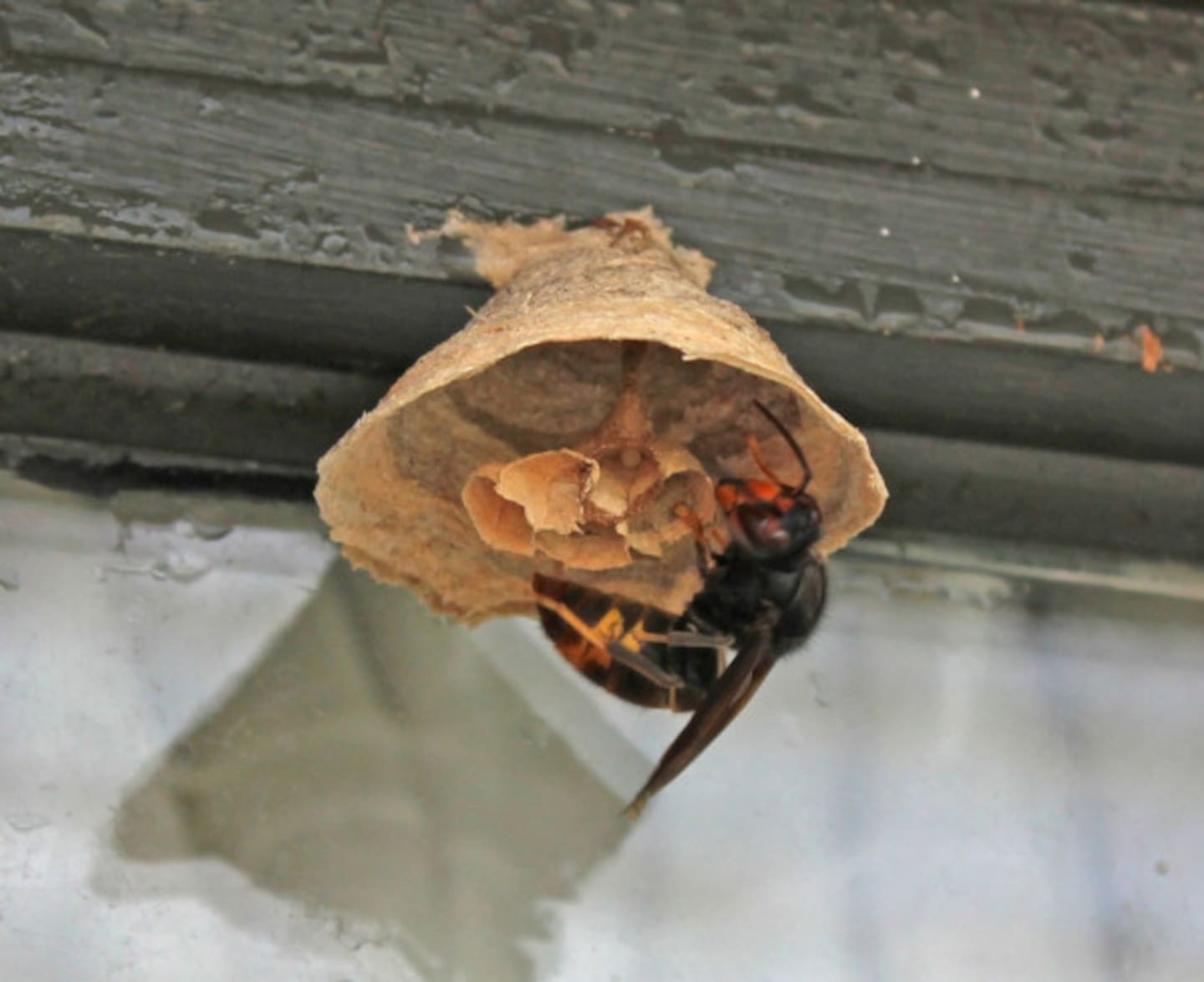
These hornets are 2cm to 3cm long, terrifying and they can deliver painful stings.
The fight to stamp them out will require more than just experts. It will need a concerted public effort and sightings must be reported to the Ministry for Primary Industries (MPI).
Their nests can grow up to 60cm wide and 80cm tall and are usually high in trees or under eaves.
The speed of this incursion is worrying.
Two male hornets were discovered in June and July in Grafton and Albany. The first queen was found in Glenfield in mid-October and its nest was removed.
As of Saturday, 33 queens have been found, 21 of which had developed nests or evidence of nesting.
Seven workers have been found in nests.
The MPI describes them as highly adaptable predators, feeding on bees, wasps, flies, ripe fruit and flower nectar. They pose a major threat to beekeepers and growers.
The discovery and its response have not been without controversy.
The MPI’s response includes increasing trap numbers fivefold to more than 600 within a 5km radius; searching more than 2100 properties; and bringing in an overseas expert and advanced technology to track workers back to their nests. It has also launched a national awareness campaign.
But Northland beekeeper and biosecurity worker Brad Windust has criticised the agency’s response as too slow and reactive.
He believes the MPI should have acted immediately after the first male hornets were found.
His petition demands include that the MPI increase the response radius to 30km; provide 10,000 free traps, with bait, and clear instructions to households within the 30km radius; and supply these traps to all beekeepers and orchardists across the North Island for widespread monitoring.
He warns hornets will spread if they survive the summer.
Professor Phil Lester, who is part of a special expert group advising the MPI, doesn’t mince words and spells out his concerns in an excellent column for The Conversation that NZME’s The Country republished last week.
He describes the situation as a “potential nightmare” and believes unless New Zealand “rapidly scales up its search effort, we could soon be confronting an incursion far tougher and costlier to stamp out”.

“Or worse, we could end up with this pest as a permanent resident.”
These chilling warnings demand attention.
Lester praises the MPI’s search efforts so far, but believes we need more people searching.
The MPI must consider the strength of its response given the criticism. There is a narrow timeframe for success.
If New Zealand can’t get on top of this problem, it is likely to have a nasty sting in the tail.