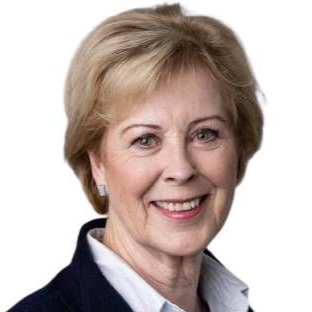

Two Kiwi businesswomen talk to Jane Phare about why they persevere in running their sustainable business in Afghanistan, in spite of a relentless barrage of obstacles.
Every time Emma Conyngham becomes overwhelmed by the almost insurmountable hurdles that come with running a business in Taliban-controlled Afghanistan, she thinks of the Afghan women she employs in Kabul.
In particular, she thinks of the woman worker who, during a visit by the Kiwi to Kabul in July this year, got down on her knees and pulled at the hem of Conyngham’s skirt.
“Please,” the woman pleaded with her employer, “don’t close the factory. Our families cannot eat without these jobs.”
Conyngham and her business partner, Afghan-born Rahila Sayed, had come close to packing it in this year. The list of problems their company, Waste Free Celebrations, had come up against was daunting. On paper, the costs outweighed the benefits.
The company makes reusable Christmas crackers, seven sizes of fabric gift bags, and wrapping cloths for Hanukkah and Diwali celebrations, designed to do away with mountains of crumpled gift paper and plastic toys that end up in landfill.

It’s a business that attracted the highest award in the 2026 Sustainability & Social Impact Awards, run by awards organisation Clean + Conscious, and a gold award and editor’s choice for its reusable Christmas crackers.
Conyngham admits she didn’t initially start the business with sustainability in mind.
“I’m a gift giver,” she says. That meant hours spent wrapping dozens of presents for her husband Alistair, their five children and a large extended family. Much easier to slip gifts into a fabric bag, pull the ribbon tight and reuse it again next year, she thought. She never imagined that a product she sewed from her Wānaka home to sell at the local markets in 2020 would morph into an export business with a production factory based in Afghanistan.
It was the launch of her own website that would eventually lead to a major shift in her lifestyle. Order numbers soared, catching Conyngham by surprise.
“I couldn’t turn my phone on for two weeks; there were so many notifications [noting a sale] coming through.”
Her sister-in-law, who worked at the Māngere Refugee Resettlement Centre in Auckland, suggested employing some of the Afghan women who needed work. As the orders grew, Conyngham relocated her family to Auckland, but it soon became evident that manufacturing and exporting from New Zealand was too expensive.
Sayed, a widow who arrived in Auckland as a refugee with her children in 2014, suggested relocating to Peshawar in Pakistan, using Afghan refugees there. But when the Pakistani Government started mass deportation of refugees back to Afghanistan in 2023, that plan fell through.
So why not help Afghan women in Kabul, Sayed suggested? Conyngham was familiar with the country, having worked in Afghanistan for the United Nations Development Programme between 2004 and 2007. Although Sayed had grown up in Pakistan, after her family fled Afghanistan when she was 2, she knew the language and the customs.
They set up in 2024, renting a large, old mansion in Kabul to convert into a factory and hiring 34 women who desperately needed work. The women are either widows, or their husbands are disabled or unable to work because of an association with the previous Western-backed Afghan Republic.

What could go wrong? Plenty, as it turns out. Two years on, Conyngham is exhausted with the stress of handling constant, and at times seemingly unsolvable, problems. Surprisingly, the Taliban Government is not one of them, she says.
“All of the issues relating to operating in Afghanistan are because of how other countries perceive Afghanistan, not actually what it’s like to operate there.”
But take your pick of some of the other problems:
- With the border between Pakistan and Afghanistan closed, and the Strait of Hormuz closed, the company can’t ship containers of goods for export. Instead, it’s been forced to use expensive air freight to New Zealand, Australia, the United States and Britain. Last year the company’s shipping bill was $68,500. This year the air freight bill was $287,250.
- Power cuts for most of the day mean the sewing machines and water pump stop working; there’s no drinking water and toilets can’t be flushed; and the Wi-Fi goes off.
- The lack of a banking system makes the payment of goods, staff and rent in Kabul extremely difficult.
- Being reported to the Taliban as Isis operatives by a disgruntled Pakistani supplier.
- The land the factory is on has been requisitioned by the government administration, so Sayed urgently needs to find new premises.
- Endless red tape because documents need to be manually stamped and signed in person by officials in different departments.
- Last year, 15,000 barcodes printed in Kabul could not be read by scanners in the export countries.
- 70,000 Waste Free Celebrations brand labels, printed in China, were destroyed because Pakistan wanted $8900 to release them, more than the tags were worth.
Sayed spends eight months of the year overseeing the manufacturing in Kabul while Conyngham bankrolls the operation and spends her days in Auckland frantically working out solutions to near catastrophes.
Being reported as Isis operatives was a heart-stopping moment. She shows the Herald that her hands still shake when she thinks back to that time.
The company sources cotton from mills in Pakistan and, when 5km of ordered fabric was unusable because it was so poorly printed, Conyngham wanted her money back from one supplier. In response, the angry and defensive mill owner reported Conyngham and Sayed to the Taliban as Isis operatives.
In Kabul, the first Sayed knew of the problem was when she tried to enter a code into an online portal for an export shipment and it wouldn’t go through. She phoned the Ministry of Industry and Commerce and was informed of their new status as suspected operatives of a terrorist organisation.
Back in Auckland, Conyngham took screenshots of the exchanges between the Pakistani mill owner and herself.
“I sent them to Rahila and said, ‘show this to the Taliban Government and say if this is who reported us as being Isis operatives, here is the record of our trade dispute showing how angry he is with us and that this is a measure of revenge.’ Within an hour, our account was unlocked.”

Power in the Kabul factory comes on for a couple of hours a day and sometimes not at all. The company has its own solar system, but the panels sometimes get too hot to work efficiently, or they simply run out.
At one stage they were paying local boys to lug large containers of water up the factory’s steep steps because the bore’s electric water pump stopped working. When the containers ran out, they bought bottled water from a local market.
In New Zealand, the basics of life are taken for granted, Conyngham says.
“You know, being able to turn on a computer or turn on your sewing machine or turn on the light or flush the toilet. If there’s no water, you can’t work.
“When the Wi-Fi goes down, communication between myself and Rahila is incredibly difficult. It could be three days before I hear back on a really critical question. We’ve learned just to muddle along.”
Almost every day, she faces another headache that needs to be sorted. When the barcodes printed in Afghanistan failed, Sayed flew from Auckland to Kabul with 20,000 New Zealand-printed barcode stickers. Conyngham joined her in July, armed with a barcode printer to solve the problem in the future.
But it’s the soaring costs that are the most worrying. This year, a shipment that was air freighted from Kabul to the US was intercepted by Customs and Border Protection at JFK Airport in New York.
“They charged us US$13,000 ($23,000) to get the container back.”
That, and this year’s $287,250 air freight bill, puts the Kabul operation at risk.
“That kind of shipping bill is not sustainable.”
All Conyngham can do is hope that the border between Pakistan and Afghanistan reopens in the future.
“If that policy reverses and we can get access to Karachi [the port] again, then we’re back in business. We can ship by sea and our costs come back under control. We’re the ones at the end who take the hit of other men’s wars.”
Warning against normalising the Taliban regime
New Zealander Richard Bennett, the United Nations special rapporteur on human rights in Afghanistan, has spoken out in the past about the danger of “normalising” the Taliban’s regime of repression and discrimination, particularly against women and girls. But he told the Herald he thinks giving Afghan women employment is a good thing, provided their working conditions and payment are fair.

Although Afghan women cannot work for a non-governmental organisation (NGO), the Government, or in senior roles, the Taliban does not ban employment in the private sector.
Of Waste Free Celebrations, Bennett says it sounds like a business the Taliban would encourage, just as it encourages tourism in the country.
He acknowledges the difficulties businesses in Afghanistan face, including the blockading of goods going over the border into Pakistan.
“It’s impacting the economy, but that’s the intention of Pakistan. They want to put pressure on the Taliban. They don’t want the economy to be successful and this is probably an example.”
Eight hours to get two signatures
The company employs one man, Noori, because certain tasks can only be performed by a man, or there are documents that need a man’s signature.
Because women in Afghanistan are restricted in travelling without a man, Conyngham bought a van so Noori can drive the women to and from their homes – which, in Kabul’s traffic, can be a two-hour trip at either end of the day.
Sayed and Noori can spend hours going between government departments to get documents stamped and signed. Once, it took them eight hours to get two signatures. Sometimes more than a dozen signatures are required to move one shipment.
“So it’s slow, it’s cumbersome, you know, they’re always suspicious, and it’s never-ending,” Conyngham says. “We just don’t know how lucky we’ve got it here [in New Zealand] with how fast and efficient our systems are.”
Several weeks ago they learned that the land the factory is on had been requisitioned by the Government. With Sayed now back in Auckland for a break, Noori is frantically trying to find new premises to rent.

Both Conyngham and Sayed say that compared with how things used to be, Kabul feels safe. When the Herald visits Conyngham’s Whitford home, Sayed is there with one of her six children, 26-year-old Farishta Michan Khel. They chat together in the lilting Pashto language, and Michan Khel translates.
Sayed’s is a story of trauma and tragedy. Her family fled to Pakistan from Afghanistan in the mid-1980s after her father was killed during the Soviet-Afghan war. They settled in a refugee camp in Peshawar when Sayed was 2.
By the age of 13, she was married and gave birth to her first child the following year. She gave birth to five more surviving children after that, and lost many in between. In 2010, her husband, who ran a CD shop in a Peshawar market, was among those killed in a bomb blast. Tradition meant the family needed to take his body back to Afghanistan for burial.
Farishta was 10 and remembers that trip, the only time she’s visited Afghanistan. Her mother describes the three months she spent there as “horrible”. There were bombings, people dying; nowhere felt safe, and everyone was scared.
“Everyone was in sadness,” Sayed says.
Now when she visits, it is different.
“There is peace.”
Conyngham agrees. Compared with when she was an aid worker in the early 2000s, Afghanistan feels safe and peaceful.
“There are so many tourists there now, doing blogs, vlogs and Instagram in Afghanistan, not just in Kabul.”
The Afghan women she employs feel safe and are happy to have work. But, she says, they feel sad they have missed out on (higher) education and so will their daughters. Afghan women cannot attend university or work in professional roles. If they have money, they can pay for private schooling or online education, but they will not be awarded a certificate to prove their qualification.
Conyngham, having worked as a humanitarian aid worker, says changes need to be community-led. She believes change will come, albeit slowly, and she sees signs of change in more liberal Kabul at least.
She can’t influence the way things are for women in Afghanistan, but she does have a sewing business, and she can provide employment, she says. Skilled sewers at the Kabul factory teach newcomers how to sew. They, too, could start their own business one day.
‘She is undefeatable’
Conyngham knows Sayed’s backstory well and says she is the perfect business partner because nothing fazes her.
“With pretty much no education, to be doing what she’s doing now is extraordinary. I could not be more proud of Rahila, of how far she has come and what she has overcome. She is undefeatable.”

Is the stress and angst worth it? Absolutely, the pair say. It might only be 34 women, but it is employment that has changed their lives, given them hope, they say.
Conyngham: “If it costs me some stress and discomfort ... I can’t take it away from them. Until my hands are completely tied, we are going to keep going.”
Since August 2021, when Kabul fell to the Taliban, New Zealand has contributed $46.7 million in humanitarian and development assistance to Afghanistan. A further $3.8m was provided to support the evacuation and resettlement of 1471 Afghan nationals to New Zealand. Many had worked as interpreters with New Zealand forces and agencies. A further 1149 Afghan refugees have arrived between July 2020 and June 2026.
The Taliban is designated as a terrorist entity under New Zealand law. Afghanistan has a level 4 “do not travel” warning on the Government’s Safe Travel website.
Jane Phare is a senior journalist based in Auckland. Her roles at the Herald have included assistant editor of NZ Herald, editor of the Weekend Herald, founding editor of Viva, features editor and deputy print editor.
Sign up to The Daily H, a free newsletter curated by our editors and delivered straight to your inbox every weekday.