Dean Fifield’s killer Elizabeth Smith makes first appearance before Parole Board
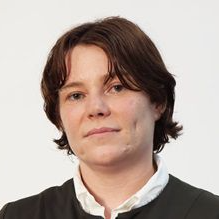

A woman who ran over and killed her former partner has been told she’s lacking victim empathy and should try to find some within the next 12 months.
Elizabeth Smith was sentenced to four and a half years in prison last August for Dean Fifield’s manslaughter.
She ran him over after a tense night in 2024 when she returned to collect personal items from a home they shared in Massey.
As Smith was preparing to drive away, Fifield emerged from the house and hit the windscreen of a vehicle belonging to friends.
Smith then drove out of the driveway and directly into him.
On Friday, she came before the Parole Board for the first time, having served half her sentence.
Board chairwoman Ann-Marie Beveridge asked Smith why she had driven at Fifield, killing him that night.
“Why did this happen?”
“Because I got into a relationship really fast,” Smith answered. “And yeah, I didn’t leave sooner and I didn’t turn my car in the opposite direction and go left instead.”
Beveridge asked if Smith knew why she didn’t drive in the other direction.
“I was just scared. Very fearful. I wasn’t thinking right at that time.”
Smith was not seeking parole during her first appearance. Her lawyer Daniel Bousfield said there were steps she needed to take for that to be considered.
Beveridge asked Smith if she stood by what she told her probation officer before sentencing, that she had purposely hit Fifield with her car in self-defence, but it was an accident that she killed him.
Smith said she didn’t “purposefully” run Fifield over. However, after she hit him, she pressed the brakes, the car slid forward and Fifield fell under the front of the car.
“And I got out of the car and I just started screaming.”
She said because Fifield had kung fu experience she thought he would “roll off” when she hit him.
“Hadn’t he been hit by a car not so long ago?” Beveridge asked.
He didn’t seem like he was still injured, Smith replied.
Bousfield mentioned that what Smith said to her parole officer last year better reflected her intentions and mental state at that time.
He said rehabilitative prison programmes were one of the steps his client was keen to start.
Smith told the court she had started an alcohol and drug programme behind bars this week.
‘You have some work to do’
Parole Board member Pauline Hopa asked what she wanted to achieve at her appearance, to which Smith replied she knew she was not going home right now and needed to finish the course.
“That’s okay,” she told the board.
Hopa asked what she wanted to achieve from the course, to which Smith said she wanted to learn how to make choices and be a better person.
She said the desired outcome for the course was to heal her own trauma, so she didn’t carry it on or make the same bad choices she had before.
Hopa asked if that was in relation to drug addiction, to which Smith replied, “yeah”.
The board went away for about 30 minutes. When they returned, Beveridge said “it won’t come as a surprise” that parole was declined.
“You have some work to do, which you yourself accept,” Beveridge said.
Smith would be before the board again in 12 months, Beveridge said, which would allow time for her to complete that work.
Beveridge said Smith’s conduct in custody was not always as good as it could be and that she needed this treatment.
She said next time Smith was in front of the board she would hopefully have a better understanding of why she committed her crime.
“Also, what would be good is a bit of victim empathy, which we seem to be lacking. So maybe through doing the programme, some victim empathy might come into play.”
Ella Scott-Fleming has been a journalist for three years and previously worked at the Otago Daily Times, Gore Ensign and Metro Magazine. She has an interest in court and general reporting. She’s currently based in Auckland covering justice-related stories.
Join the NZ Herald’s Open Justice team for Case by Case, a video and podcast series examining the disputes and decisions making headlines across New Zealand.