Bondi massacre: New Zealand ‘a small millimetre away’ from another mass-casualty event

Does the deadly attack in Bondi mean New Zealand is less safe? David Fisher speaks with security experts who say much more needs to be done here to protect Kiwis.
The terror attack in Bondi took place against a volatile international backdrop that is prompting violence across the world and could see a similar atrocity play out here – again.
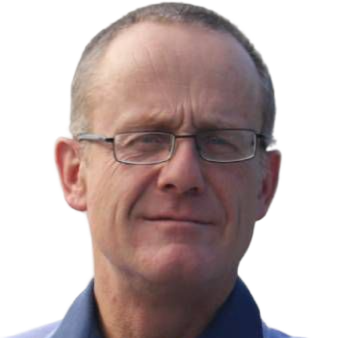
“We’re only a small millimetre away from that occurring in our own backyard again,” Chris Kumeroa, principal security adviser to the government-established voluntary Crowded Places Security Advisory Group and director of Global Risk Consulting, said.
Fifteen innocent people died and 42 were injured in Sunday’s terror attack at Bondi. Fifty-year-old Sajid Akram, shot dead by police, and his son Naveed Akram allegedly opened fire on a crowd gathered to celebrate at a Jewish Hanukkah festival.
There is growing political, religious and social polarisation in New Zealand and Kumeroa, a former New Zealand Special Air Service (NZSAS) operator with specialist training in counter-terrorism, said more could be done to blunt the risk.
Kumeroa – and other experts interviewed by the Herald – stressed there are significant differences between New Zealand and Australia, including different international relationships, and migrant communities.
They feared New Zealand remains complacent and naive despite the horrors of March 15, 2019, when 51 people were shot dead at mosques in Christchurch.
The same concerns were raised during the Security of Crowded Places in New Zealand Forum, held in July this year, at which security professionals in – and outside – government gathered to assess the country’s preparedness for attacks in malls, schools, transport hubs, concerts and other places where people congregate.
It is the Crowded Places Security Advisory Group – along with police – that has helped develop and communicate the “Escape, Hide, Tell” doctrine for those caught up in terror events.
A report from that forum found the plan was good, and co-operation across government agencies had improved, but New Zealanders generally hadn’t heard about it, or bought into it.
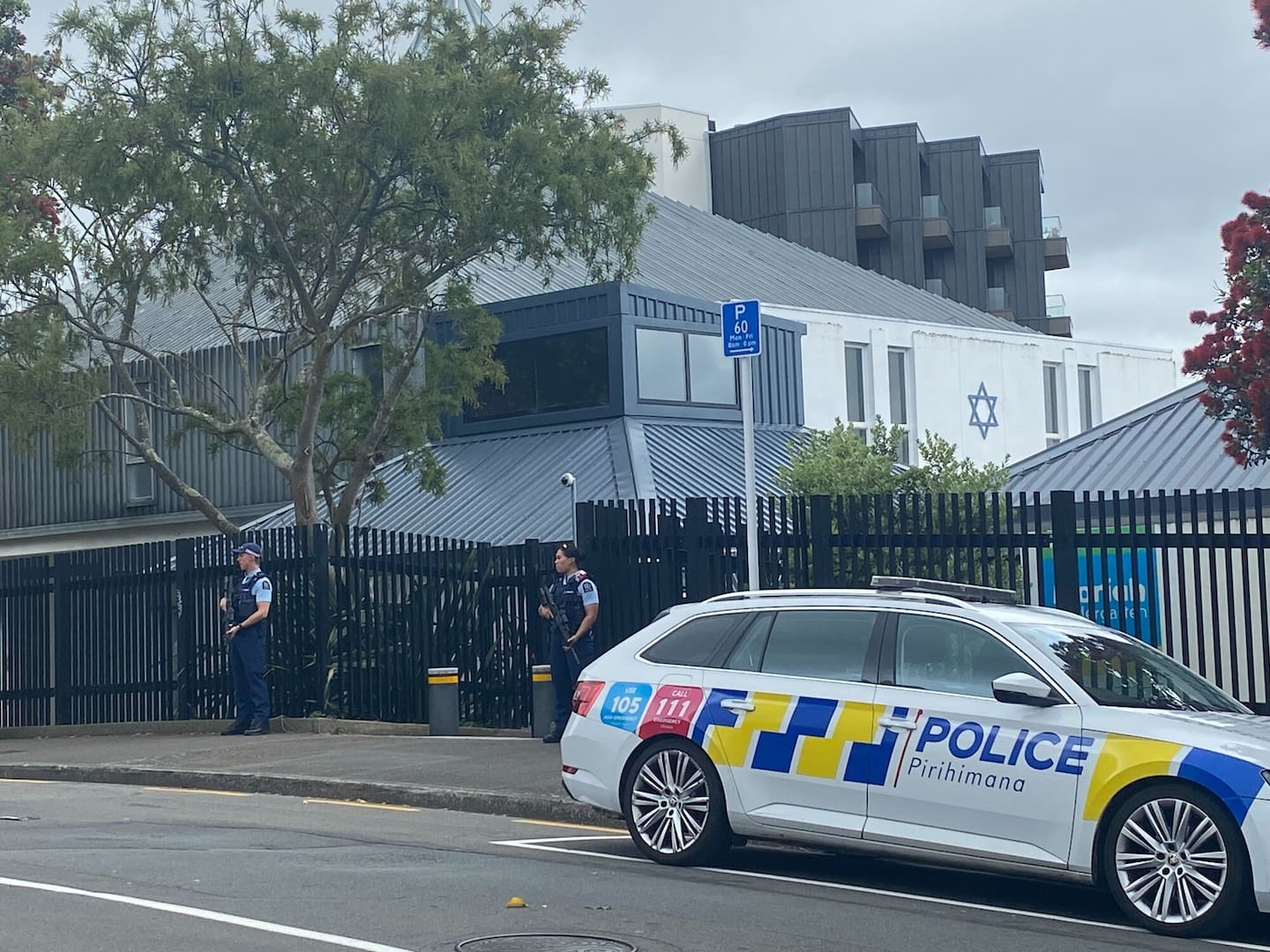
Kumeroa said when communities are polarised on issues, and there is a reduction in social cohesion, the risk of attack is higher.
“What are the things that disconnect us? Whether through religious or political lines, it’s these things that create this divide.”
He said finding ways to build understanding between – and across – communities was the long-term resolution to threats such as those played out so violently in Bondi.
Watching video of the shooting, Kumeroa was struck by the planning he believes went into the attack, including choice of weapons – shotgun and high-powered rifle – body armour, ammunition belts and location.
It was an iconic Australian setting hosting a Jewish community event, at which the shooters arrived at a location that allowed them to carry out the attack.

“It was almost like a fishbowl,” Kumeroa said.
‘Gun control needs to be stricter’
A military-style semi-automatic weapon would have seen a much higher death toll.
Australia’s gun laws were radically tightened after the Port Arthur massacre in 1996, with most of these types of weapons removed from civilian use.
However, Kumeroa said the number of people killed at Bondi showed gun laws – in both Australia and New Zealand – may not be safe enough.
“I still think gun controls need to be stricter, as someone who has seen the destruction caused by these weapons.”
Kumeroa’s Global Risk Consulting produces security reports that analyse patterns and emerging risks. A recent analysis provided to the Herald found both the Israel-Palestine and Russia-Ukraine conflicts had created greater polarisation in New Zealand.

The analysis highlighted the increase in pro-Palestine demonstrations, and said while most were peaceful, some had seen instances of anti-Jewish vandalism, graffiti and the defacing of monuments and repeated attacks on the electorate office of Prime Minister Christopher Luxon.
It also said pro-Israel protests, drawing support from Christian fundamentalist groups, saw messaging around the debate framed as an existential battle between good and evil.
The analysis emphasised the non-violent nature of most protests in New Zealand, but said post-Covid global narratives around grievance, combined with misinformation and high-profile international conflicts was challenging New Zealand’s broadly cohesive and liberal social fabric.
The analysis also studied the drivers of those caught up in movements, saying those who had feelings of dignity-loss and moral righteousness were finding a form of fulfilment by becoming ideologically engaged – and even radicalised.
‘There is no 100% safety’
Massey University senior lecturer Rhys Ball – a former New Zealand Security Intelligence Service (NZSIS) officer – said intelligence agencies, including those in New Zealand, would be studying the Bondi attack and asking if it was a new front in the ongoing conflict in Gaza.
“Does this reflect an approach that pro-Palestinians around the world have decided this is a way to get back at Israel?”
It also raised the question of whether it was an example of what terrorism experts call a “spectacular”: a planned high-impact attack intended to cause public shock, mass casualties and sustained media attention.
A decade ago, lone wolf attacks were generally less sophisticated and had less impact.
“How do you prevent it happening beforehand? I don’t think you can with 100% certainty.”
Ball said New Zealand still took confidence in its security because of its distance from the rest of the world.

“Can it happen here? The challenge is no one is really thinking about these sorts of things beyond the agencies themselves.
“We still don’t have conversation within New Zealand society that is thinking about security and safety in any way other than this kneejerk response. Security is usually down the pecking order of issues.”
It’s an issue that has been raised in recent years by Muslim organisations criticising the Government’s decision to drop March 15 Royal Commission recommendations such as hate speech laws, mandatory reporting of firearms issues and a new umbrella intelligence agency.
The University of Auckland’s Dr Chris Wilson – a specialist in political violence and extremism – said tensions in New Zealand were lower than in Australia but the attack showed the risk faced by all Jewish communities.
Wilson said New Zealand was also free of the history of western Sydney hosting Islamic cells willing to carry out atrocities. New Zealand had also not experienced the degree of anti-Semitism that had been seen in Australia, he said.
He said there were also movements - such as the neo-Nazi movement - that had not taken hold as strongly in New Zealand as they had in Australia.
Wilson said New Zealand often showed “a bit of a naive perception of terrorism”.
“We often just go about our lives as if we are somehow removed from that.”
Over the past three years in Australia, there has been an arson attack on the kosher Lewis Continental Kitchen, and swastikas painted on the Newtown Synagogue in an attempted arson attack.
Israeli leaders have criticised the country for allowing what they see as a permissive environment for anti-Semitism.
After the Bondi shooting, Israeli Prime Minister Benjamin Netanyahu has criticised Australian Prime Minister Anthony Albanese’s decision to support a Palestinian state alongside Britain and Canada in September.
In August, the NZSIS published its 2025 Security Threat Environment Report, which warned of increasing levels of polarisation and grievance driving support for violent extremist ideologies.
The national threat assessment still rates the risk of a terror attack as low – that a terrorist attack is a “realistic possibility”.
David Fisher is based in Northland and has worked as a journalist for more than 30 years, winning multiple journalism awards including being twice named Reporter of the Year and being selected as one of a small number of Wolfson Press Fellows to Wolfson College, Cambridge. He joined the Herald in 2004.
Sign up to The Daily H, a free newsletter curated by our editors and delivered straight to your inbox every weekday.