Artificial humanity? I pray not – Jonathan Ayling

I recently saw a comparison of three very different apps that have reached the top of Apple’s App Store.
Unsurprisingly, one was ChatGPT and another was Claude. But the third caught my attention: Hallow, a Catholic prayer app.
There is something revealing in that contrast. While millions are downloading software capable of answering any question and completing tasks in seconds, millions are also using technology to seek stillness and silence.
As ThreeNewsrecently reported, artificial intelligence (AI) is advancing so rapidly that researchers at AI company Anthropic have even asked: “Is AI already conscious?”
It is a fascinating (and troubling) question. But before deciding whether machines are becoming more like us, we need to return to a much older one: what does it even mean to be human?
I was confronted with that question several years ago while attending a human rights conference in Washington, DC.
A woman who helped individuals flee the oppressive regime in North Korea described how her organisation would send helium balloons across the border. Attached to them were medical supplies, food and forbidden cultural material: books, pamphlets, CDs and USB drives.
She once asked a young woman who had escaped why she had wanted to leave. After all, according to her leaders, she had lived in a socialist paradise, protected from the horrors of the wider capitalist world.
The young woman replied that she had found one of the USB drives. On it was the film Titanic.She had never imagined, she said, a love like that between Jack and Rose: a love that would lead someone to give his life for another freely.
I remember being shocked (not only by the discovery that some good had, apparently, come from Titanic),but by the tragedy beneath her answer. The regime had not merely deprived her of political freedom or material comfort. It had constricted her moral imagination. The idea of freely chosen, sacrificial love, such a very human impulse, had disappeared from her society.
That is what tyranny does: it not only restricts what people may say or do, it reduces what they can imagine, admire and love.
Yet tyranny comes in more than one form.
The familiar contrast between George Orwell’s 1984and Aldous Huxley’s Brave New Worldis useful here. Orwell feared a society in which the human spirit would be crushed by censorship, surveillance and pain, while Huxley feared one in which it would be dissolved by pleasure, distraction and convenience. Where one author imagined people deprived of what they loved, the other imagined them anaesthetised by entertainment, too superficial to love anything deeply.
The danger for our society is probably more Huxleyan than Orwellian.
We may not be forbidden from loving, thinking or creating. We may simply be offered easier substitutes until we lose the appetite to do these things ourselves.
Wendell Berry, the prominent American poet, wrote: “It is easy for me to imagine that the next great division of the world will be between people who wish to live as creatures and people who wish to live as machines.”
That was back in 2000. Imagine what he would say now. I certainly don’t think he’d be surprised at the popularity of the app Hallow and the hunger it reveals.
“Prayer”, in the myriad forms it takes, offers a truly human experience. It is among the least machine-like things we can do. It is an act of attention rather than production. While a chatbot is designed to conform itself to us, those who pray seek to conform themselves to something greater.
Every technology carries an assumption about the human person. Much of modern culture has oscillated between two inadequate accounts of humanity. One is reductionist and materialist: we are sophisticated arrangements of mere matter, biological machines shaped by appetite and environment. The other says that who we “really” are is found deep within us; our physical existence imprisons our inner self.
Strangely, AI can fit both visions. If the human mind is simply an information-processing machine, then a more powerful machine looks like a superior version of us. If the true self is detached from the body, then the digital life promises escape from place, dependence and physical limitation.
But is either correct, without the other? We are neither biological computers nor sovereign minds trapped in inconvenient flesh.
We need a rich account of the human person: one that distinguishes simple convenience from true flourishing, enhanced output from actual contribution and assistance from technology from surrender to technology.
We are embodied, dependent and relational creatures. Much of who we are is given to us through our bodies, but we are also formed through our choices, families, beliefs and obligations. So it is striking that, amid the rise of artificial intelligence, a prayer app could also rise to the top of the Apple Store. AI stands to have enormous benefits, but we will need AW (ancient wisdom) to use it well.
Why struggle to write, compose, draw or reflect when a machine can do it instantly? The danger is that, while we produce more, we stop practising the habits that make us fully human. Perhaps the most important question of the AI age is not whether machines are becoming human, but how we don’t simply become more like machines.
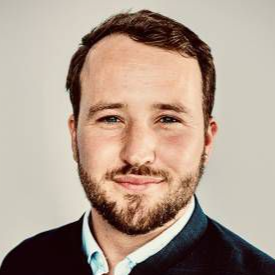
Jonathan Ayling is a strategy consultant and professional director. He is the former chief executive of the Free Speech Union (NZ), an Act Party supporter and donor, and has worked as a ministerial staffer and senior Parliamentary adviser in both Government and Opposition.
Catch up on the debates that dominated the week by signing up to our Opinion newsletter – a weekly round-up of our best commentary.