Gas Security Fund: Who else is lining up to apply for loans from Govt’s $200m fund?


The Government’s $200 million Gas Security Fund awarded its first payout last week and if Resources Minister Shane Jones has his way it will be fully subscribed before the November election.
The money isn’t likely to develop any big new field, as initially planned. The natural gas it does bring to market is likely to be from existing reserves (perhaps already considered commercially viable) and some of what it buys will be gas storage.
Just 17 companies have applied for help, which looks like a pretty poor showing until you consider how few companies remain active in New Zealand oil and gas exploration and production – fewer than a dozen.
The fund’s first payout, a loan of $23.5m, was announced last week and goes to Todd Energy, owned by one of the country’s wealthiest families.
Parent firm Todd (previously Todd Corporation) donated to the National Party in 2024 and 2025, a total of $14,261.
National Party MP and Associate Minister of Finance Chris Bishop signed off the Todd loan, alongside Minister Jones (this does not breach Cabinet Manual rules).
A spokeswoman for Bishop said his decision was not affected by the donation and that the only record of a meeting between Bishop and Todd this term relates to the housing portfolio and the Tamaki Regeneration Programme.

Critics warn variously that the controversial pot of money is too little to repair market damage from a recently reversed oil and gas exploration ban; that it is a subsidy to energy companies and a waste of public money that comes with little transparency (loan terms, including interest rates, remain secret); and that it breaks the climate-related rules New Zealand has set for itself.
And purists beware, where there’s gas there’s typically oil, and more of the latter is also likely to flow as a result of investments.
So, what do we know about the gas fund, who will benefit and whether it will boost the dwindling gas supply on which both the electricity market and commercial and industrial users hope to rely?
Who else might tap the fund?
The most likely applicants are those already active in New Zealand oil and gas, among them the two major domestic companies, Todd and Greymouth Petroleum.
There are only two sizeable international players. Austria’s OMV, owner and operator of the Māui field, has spent recent years trying, unsuccessfully, to sell its New Zealand assets, and Australia’s Beach Energy Resources, operator and 50% owner of the Kupe field.
Both companies confirmed they haven’t applied to the fund, which leaves a handful of much smaller potential contenders.
Vancouver-based New Zealand Energy Corp holds various onshore licences in the Taranaki basin (jointly held with local firm L&M Energy) and has been drilling this year in the Tariki field.
NZ Energy also applied recently for new exploration acreage, on and offshore in Taranaki, with one of its shareholders, Monumental Energy.
NZ Energy also has a development-stage gas storage project in Tariki, for which it has a non-binding agreement to collaborate with gentailer Genesis.
Several sources said this project is the subject of an application to the fund and it may even be the next one approved.
The gas fund was broadened to include storage capacity in light of the imminent departure of behemoth gas user Methanex; the company previously acted as a kind of storage proxy, as it absorbed a large share of production in ordinary times and sold its gas to other users when demand was high.

UK-based Sunda Energy is set to buy into New Zealand with the purchase of Matahio NZ, which has producing assets, a plan to revive the small Puka field in south Taranaki, and an exploration target adjacent to the field, Oru-2.
Adelaide-based EnZed Energy also has licences offshore in Taranaki, and its exploration plans encompass the Kaheru prospect east of the Kupe field.
Westside New Zealand, which is ultimately Chinese-owned, also has permits in the area.
With the exception of Beach, none of the companies listed confirmed whether they have applied for funding.
Todd’s plans
The $23.5m loan secured by Todd covers two projects. The McKee Gas Cap project to drill and connect a new well at the McKee field will soak up $16.2m of the loan. Todd will use its own rig, Big Ben, to do the work.
And the McKee-Tariki Production Well project, which will use an existing well to tap more deeply into the Tariki reservoir, will take the remaining $7.3m. In addition, Todd will kick in $10m, and both projects are expected to be completed by next year.
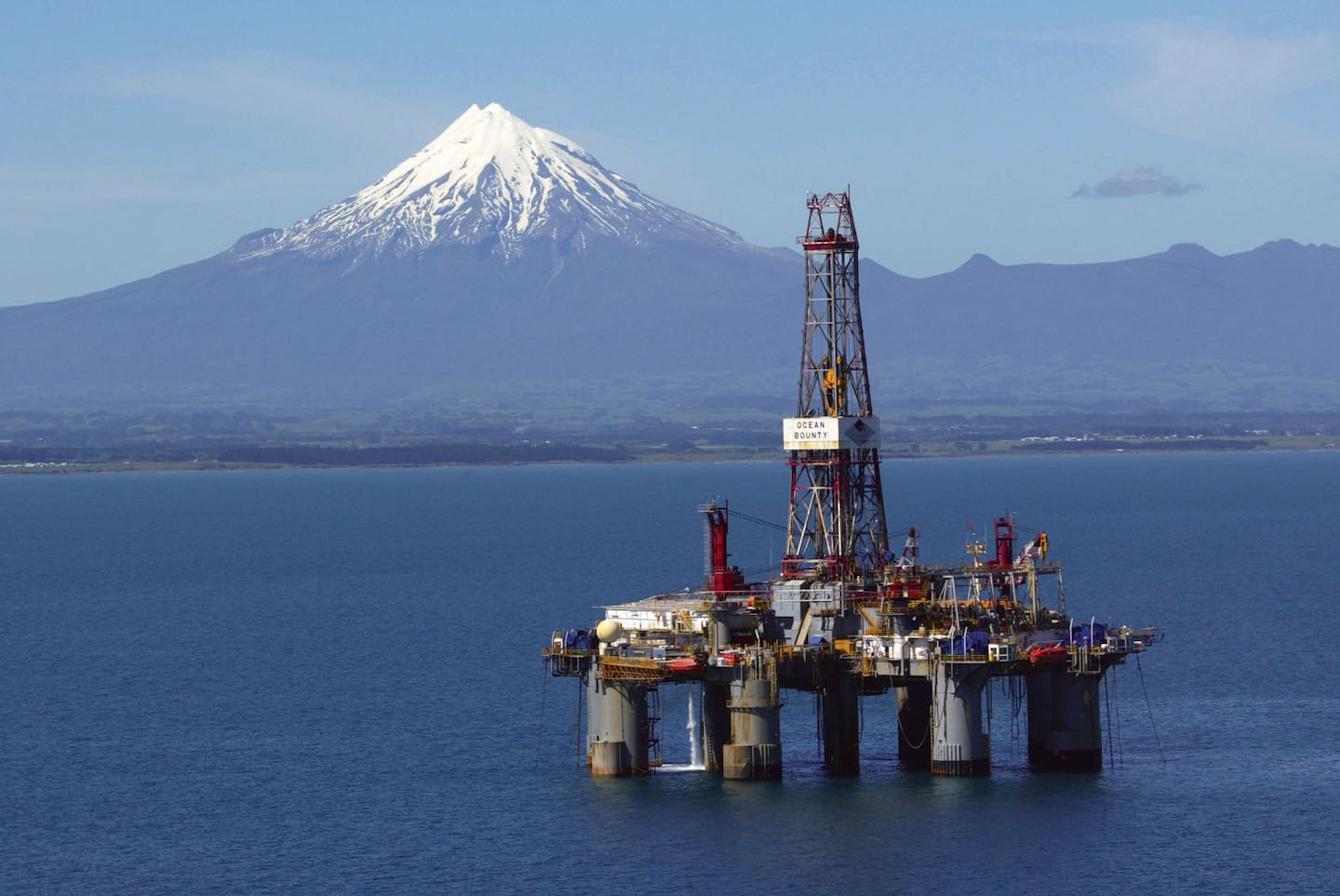
The Government press release said the projects could add as much as 19.9 petajoules of additional gas reserves to New Zealand users, but related questions to officials and Todd went unanswered. It isn’t clear that the work will boost New Zealand’s existing gas reserves at all.
The Ministry of Business, Innovation and Employment’s (MBIE) main benchmark relies on a measure known as proven plus probable reserves (2P).
In May, New Zealand’s 2P reserves were 731 petajoules.
Brent Chambers, a general manager at MBIE’s investment unit Kanoa, declined to confirm whether Todd’s possible 19.9 petajoules would add to that 731 petajoule total, already broadly considered commercial.
Todd spokeswoman Lee Blake said the company doesn’t disclose “detailed project-level resource allocations, reserve or resource classifications, or other commercially sensitive technical information”.
The 2P designation is a combination of proven reserves, carrying a 90% probability of being commercially recoverable and probable reserves, carrying at least a 50% probability of being commercially recoverable.
Would companies otherwise fund this work themselves?
When money for the fund was originally set aside in Budget 2025, the aim was for the Crown to take a commercial stake, 10-15%, in new gasfield developments.
That purpose has morphed considerably. Industry body Energy Resources Aotearoa and its members pushed for a revised focus on near-term developments that can add more gas to the market quickly.
“It was a pragmatic change. The problem of steeply declining production is here now,” chief executive John Carnegie told the Herald.
Indeed, both reserves and production have dropped sharply in recent years. But a near-term focus increases the likelihood the Crown will pay for projects that would otherwise have been funded commercially.
In an interview with the Herald, Jones accepted that it is possible, and perhaps even likely, that Crown-funded projects will overlap with work companies would otherwise have pursued alone.
But he said the risk that the Crown is helping companies unnecessarily is offset by the risk that without help companies would do too little.
“...we find ourselves in a situation where a whole variety of users, including crematoriums, are saying they can no longer access gas. So we made a decision, via our Cabinet, to contribute to de-risk the emergence of additional gas.
“Now whether or not that gas would have come to the market anyway, well we contrast that anxiety against the need to ensure that the nation has additional gas.”
Carnegie also warned that New Zealand’s chilled investment climate for gas means that instead of investing to produce their 2P reserves, as might be expected in ordinary commercial circumstances, firms are waiting to act and even walking away from them.
One handbrake on company investment is that both the Labour and Green Parties promise to reinstate the ban on offshore oil and gas exploration if re-elected.
Lending terms
There is no upper limit on what the fund will loan to a single project but the aim is to ensure a portfolio of investments. It’s expected that all funding will be provided through loans.
Kānoa’s Chalmers maintained that the terms of these loans are confidential, “because releasing this information could prejudice the recipient’s commercial position and/or Kānoa’s position in current and future negotiations. This would not be in taxpayers’ interest”.
This is Kānoa’s standard approach to the details of its extensive lending – including that of both the Regional Infrastructure Fund and the Provincial Growth Fund.
However, there is no blanket reason why the terms of Crown loans cannot be released to enable transparency in how the public’s money is spent; other government agencies do this regularly – for example, the Treasury released a detailed breakdown of the interest rates attached to Crown loans to Air New Zealand in 2020 and 2021.
The Herald has a complaint about Kānoa’s undifferentiated secrecy with the ombudsman on the matter.
Jones says he will confer with Bishop, considering the public interest in transparency, and may release further details of the lending.
Climate considerations
Readying the fund was delayed by several factors, including a Supreme Court decision late last year that the Government must weigh climate change in tendering oil and gas permits. Jones says officials took considerable time weighing its implications.
The Green Party also claims that the fund subsidies breach New Zealand’s international obligations.
The party’s resources spokesperson Steve Abel told the Herald: “The Coalition Government’s Gas Security Fund does breach the Agreement on Climate Change, Trade and Sustainability. This was confirmed through legal advice [obtained by the Green Party] that found that the Government’s co-investment in gas exploration is a ‘clear breach’ of a prohibition on subsidies for fossil fuels.”
The agreement was inked with Costa Rica, Switzerland and Iceland (none of which have domestic oil and gas production and all of which import fossil fuels).
Jones is no fan of the agreement but his Government ratified it last year: “Throw a dog a bone, we [New Zealand First] got 6.5% of the vote, please ask the minister [Trade Minister Todd McClay] why he did that. Some things NZ First campaigned on and others you have to roll with the blows...welcome to coalition politics.”
Still, he insists, the Ministry of Foreign Affairs has reviewed the gas fund and its lending arrangements and there is “no breach”.
- Stay ahead with the latest market moves, corporate updates, and economic insights by subscribing to our Business newsletter – your essential weekly round-up of all the business news you need.